
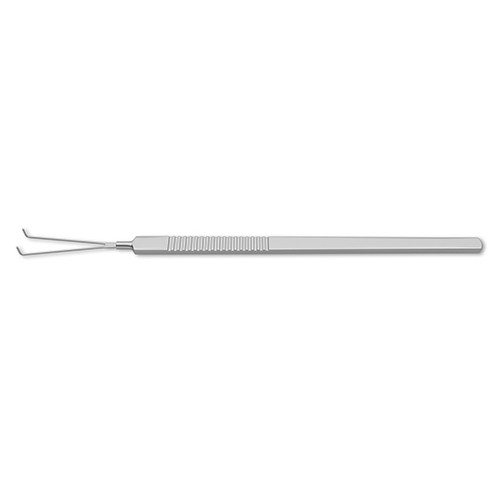
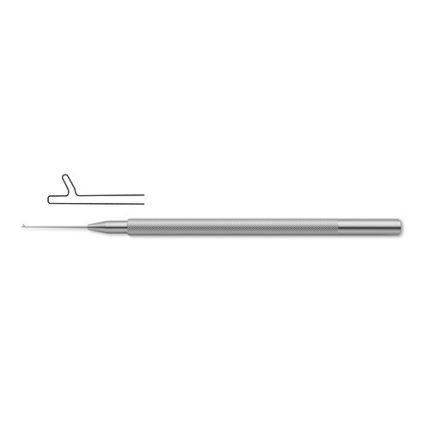
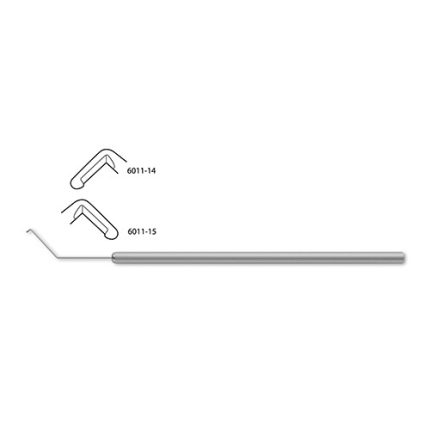
Manson Double-Ended Strabismus Hook
3.0 mm forked, angled blades, 7.0 mm blades spread, flat serrated handle, 4.8″ (12.3 cm) Manson Double-Ended Strabismus Hook is a unique tool in ophthalmic operations involving the ocular muscles. The hook features 3.0 mm angled blades with a 7.0 mm spread for selective retraction and elevation of tendon insertions. In addition, the hook features a flat serrated handle for increased gripping power.
Description
| Name | Manson Double-Ended Strabismus Hook |
| Lead Time | Lead time advised within 48 hours of order placement. |
| Competitor | ;OP0924651;OP0924-651;E0598;601349;60-1349;6013-49; |
| Specialty | Ophthalmology-Hooks & Manipulators |
| Material Finish | Stainless Steel |
| Grade | Premium Operating Room |
| Units of Measurement | Each |
| Manufacturer | Euro Site Industries |
| Sterility | Non-Sterile |
| Usage | Reusable |
Reviews (0)
Shipping & Delivery
Related products
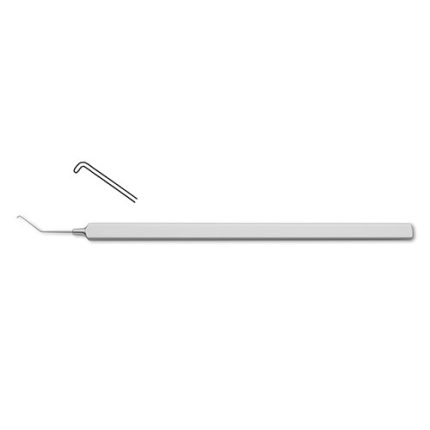
Clayman-Jaffe Lens Manipulating Hook
9.0 mm shaft w/ 0.2 mm hook, angled 45 degrees, 4-3/4" (12.0 cm)s Clayman-Jaffe Lens Manipulating Hook is a commonly used tool during cataract procedures. The hook is used to manipulate the opacified native lens during a phacoemulsification procedure. The 45 degree angled hook is ideal for moving the lens into a desired position for removal.
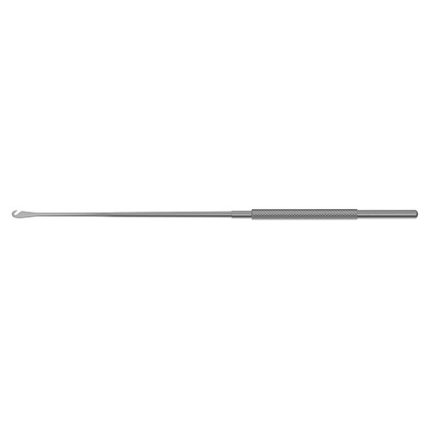
Crawford Retrieving Hook
round handle, 5-5/8" (14.3 cm) Crawford Retrieving Hook is a frequently used tool in occuloplastic procedures. The hook is used primarily to engage a silicone shut placed through the lacrimal apparatus from the nose. The extended length of the hook is designed to accommodate a variety of patient sizes.
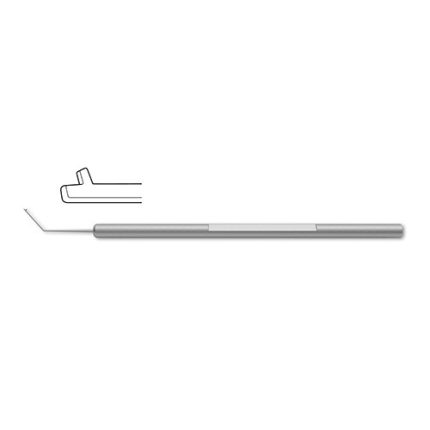
Fenzel Lens Manipulator
10.0 mm shaft w/ 0.2 mm t-shaped hook, 4-3/4" (12.0 cm) Fenzel Lens Manipulator is a commonly used tool during cataract procedures. The manipulator features an additional stabilizing bar on the tip to aid in controlling the lens to an appropriate position for extraction. Both straight and angled models are available depending on surgical preference.
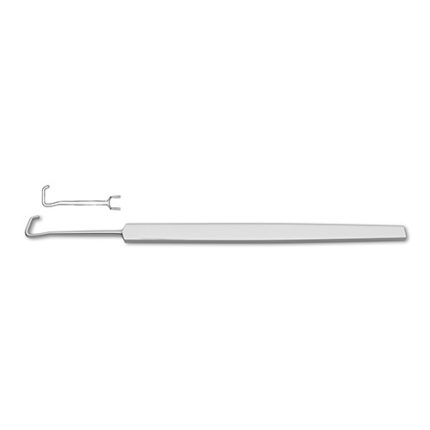
Green Strabismus Hook
flat handle, 5-1/8" (13.0 cm) Green Strabismus hook is a commonly used instrument in performing procedures involving the ocular muscles. The hook can be used to elevate the muscle tissue for dissection and reattachment. The toe of the hook is designed to press against the sclera and "ski" along the surface until the full muscle width has been discerned.
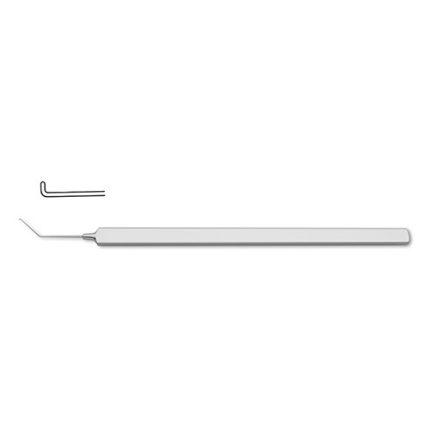
Harris-Sinskey Lens Manipulating Hook
0.25 mm diameter, blunt tip, angled Harris-Sinskey Lens Manipulating Hook is a useful tool in cataract procedures. The hook may be used to maneuver lens tissue in order to facilitate extraction of the opacified tissue. The smaller diameter hook affords the surgeon increased control during the procedure. In addition, the blunt tip ensures minimal tissue damage or posterior capsule tear.
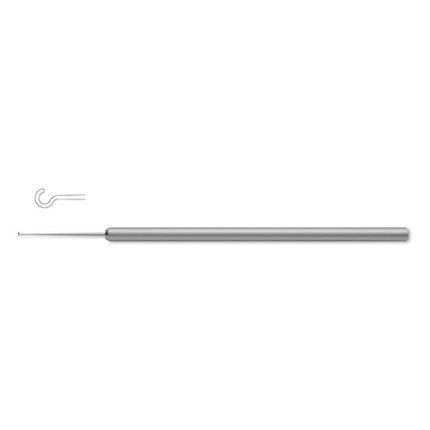
Knolle Iris Hook
0.5 mm hook, 4-7/8" (12.4 cm) Knolle Iris Hook is a commonly used tool in cataract surgeries. The hook is used to retract a portion of the iris tissue to gain access to the lens capsule. Often, multiple hooks are used at different positions around the iris and anchored, providing adequate visualization for lens removal. The Knolle hook has a slender tip for more selective retraction while featuring a serrated handle for an improved grip.
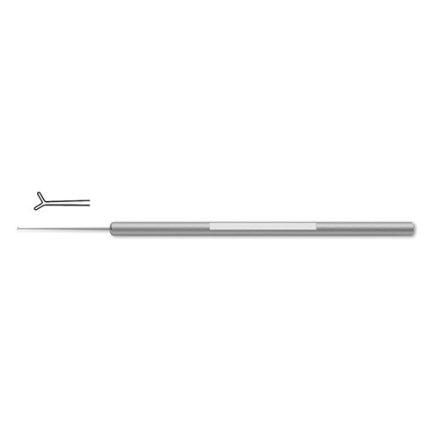
Osher “Y” Hook Lens Manipulator
straight shaft, round handle, 4-3/4" (12.0 cm)Osher "Y" Hook Lens Manipulator is a commonly used tool during cataract procedures. The hook is used to manipulate the opacified native lens during a phacoemulsification procedure. The "Y" shape design allows for a more controlled grip of the lens and enhanced maneuverability.
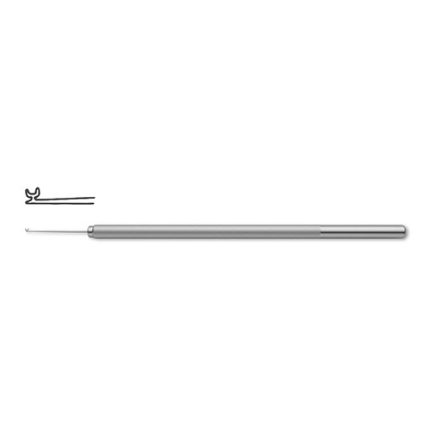
Osher Nucleus Manipulator
smaller than 60-1313, 0.5 mm two-prong tip, blunt, 4-1/2" (11.5 cm) Osher Nucleus Manipulator is a useful tool for cataract procedures. The tool can be used to shift the center of the lens to a proper surgical position if it slips underneath the surrounding iris tissue. The two prong blunt tip is ideal for easy manipulation without risk of damaging surrounding tissue.

Reviews
There are no reviews yet.