
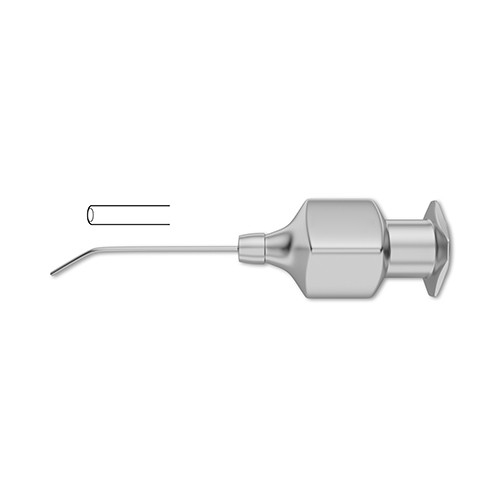
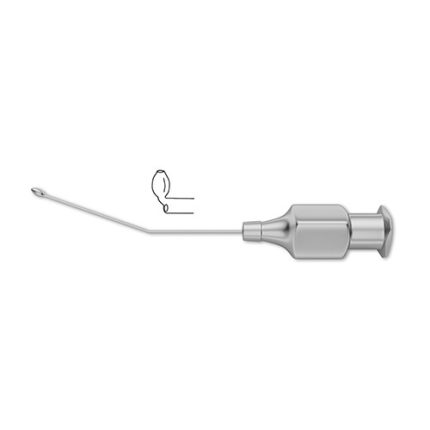
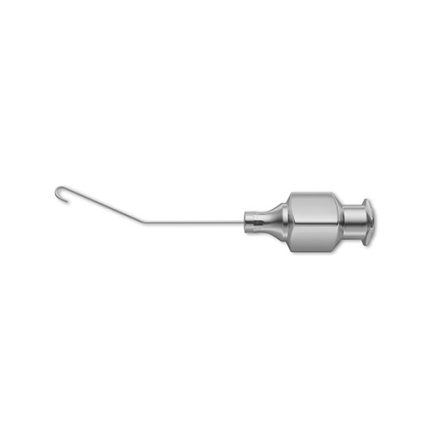
Gills-Welsh Cannula
25-gauge, angled Gills-Welsh Cannula is a commonly used tool in cataract and various other ophthalmologic procedures. The small gauge of the cannula may be used to aspirate fluid in the anterior chamber of the eye following a limbal incision. Four different angles are available with the cannula depending on surgical preference.
Description
| Name | Gills-Welsh Cannula |
| Lead Time | Lead time advised within 48 hours of order placement. |
| Competitor | ;OP0902804;OP0902-804;E49315;601198;60-1198;6011-98;OP0902805;OP0902-805;601199;60-1199;E4931-7;E49317;6011-99;OP0902806;OP0902-806;E49318;601200;60-1200;6012-00;OP0902807;OP0902-807;601201;60-1201;6012-01;6011-98_6012-01; |
| Specialty | Ophthalmology-Cannulas |
| Material Finish | Stainless Steel |
| Grade | Premium Operating Room |
| Units of Measurement | Each |
| Manufacturer | Euro Site Industries. |
| Sterility | Non-Sterile |
| Usage | Reusable |
Reviews (0)
Shipping & Delivery
Related products
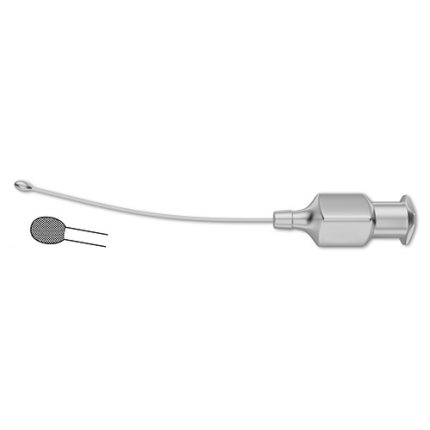
Jensen Capsule Polisher
tip flattened, 19-gauge Jensen Capsule Polisher is a useful tool in cataract procedures. The polisher is used to remove opacity on the posterior capsule leading to improved surgical outcome. The diamond dusted tip is delicate enough to prevent rupture of the capsule. Two sizes are available with the polisher depending on surgical preference.
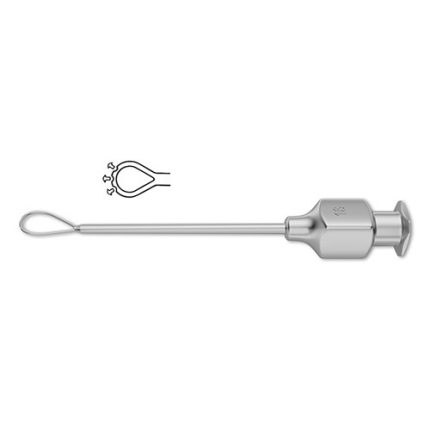
Knolle-Pearce Irrigating Lens Loop
1.0 mm tip, angled 30 degrees, sandblasted, 23-gauge, 3/4" (2.0 cm)Knolle-Pearce Irrigating Lens Loop is a useful tool for cataract and lens extraction procedures. The loop is instated between the nucleus and the posterior capsule; fluid is allowed to pass into this space to allow for easier removal of the lens. Three irrigation ports provide ample fluid distribution.
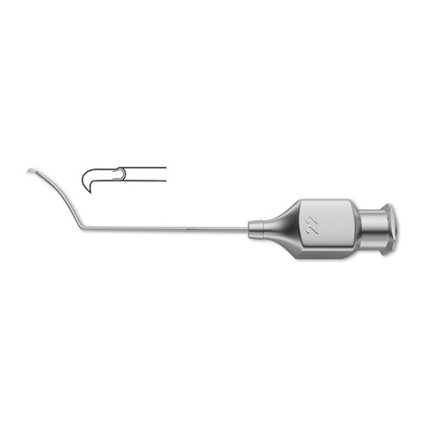
Kratz Cystotome
30-gauge Kratz Cystotome is a commonly used tool during cataract phacoemulsification procedures. The cystotome may be used to create a circular incision in the anterior capsule before proceeding with aspiration of the lens. The sharp tip combined with 60 degree angled shaft allows for easy cutting and visualization.
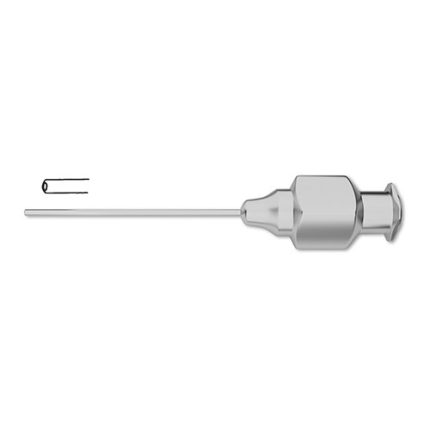
Lacrimal Cannula
1.2" (3.1 cm) shaft w/ 2.0 cm reinforced, 23-gauge Lacrimal Cannula is an extremely useful tool in treating tear duct obstructions. The cannula may be used to investigate blockage of lacrimal gland damage or more frequently, obstruction of the nasolacrimal duct. The slender profile of the cannula allows access to the small entrances of the duct. Two different working lengths are available with the cannula depending on surgical preference.
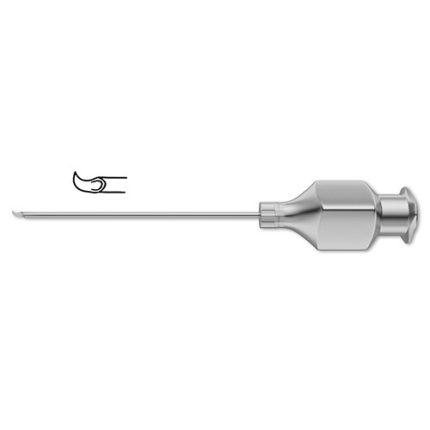
Lieppman Cystotome
w/ guard, 22-gauge, 2" (5.0 cm)Lieppman Cystotome is a commonly used tool during cataract phacoemulsification procedures. The cystotome may be used to create a circular incision in the anterior capsule before proceeding with aspiration of the lens. The tool features a guard to prevent extraneous damage to the surrounding iris or globe tissue.
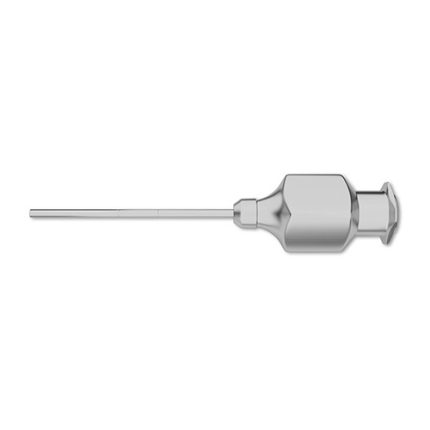
Maumenee Vitreous Aspirating Needle
blunt tip w/ markings, 5.0 mm, 10.0 mm & 15.0 mm, 18-gauge Maumenee Vitreous Aspirating Needle is a commonly used tool in retinal ophthalmologic procedures. The needle features a large gauge designed for the aspiration of the viscous vitreous fluid following retinal detachment or increased pressure. In addition, markings on the gauge aid the physician in navigation of the tool.
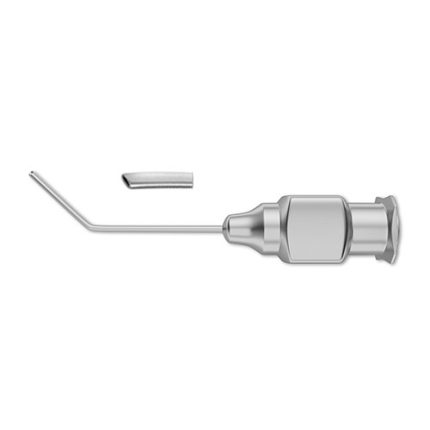
Nucleus Hydrodissection Cannula
25 gauge, 7.0 mm angled shaft w/ flattened tip, overall length 21.0 mm (excluding hub)Nucleus Hydrodissection Cannula is a useful tool in cataract extraction procedures. The cannula can be used to manipulate and rotate the lens during a hydrodissection for easier extraction. The small gauge with flattened tip assures minimal trauma to the surrounding tissue.
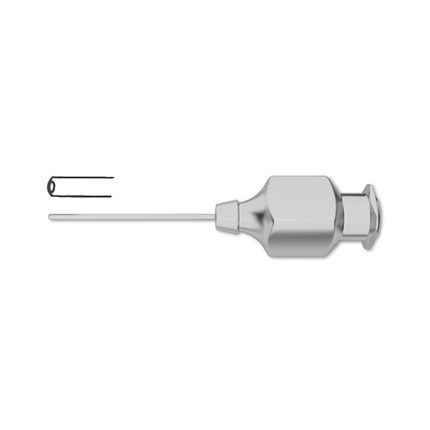
Scheie Anterior Chamber Cannula
blunt, 27-gauge, 3/4" (2.0 cm)Scheie Anterior Chamber Cannula is a frequently used tool in cataract extraction procedures. The small gauge cannula is nimble enough to fit into a small limbal incision accessing the anterior chamber. It may be used to aspirate fluid within the anterior chamber exposing the lens capsule.

Reviews
There are no reviews yet.