
Shop
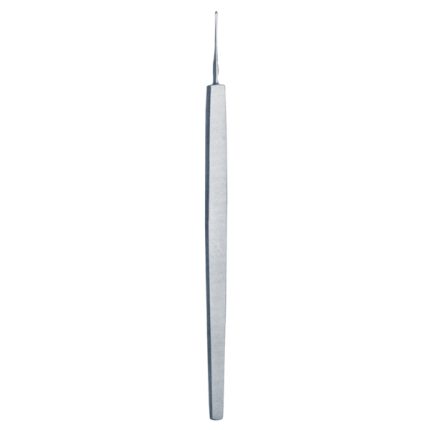
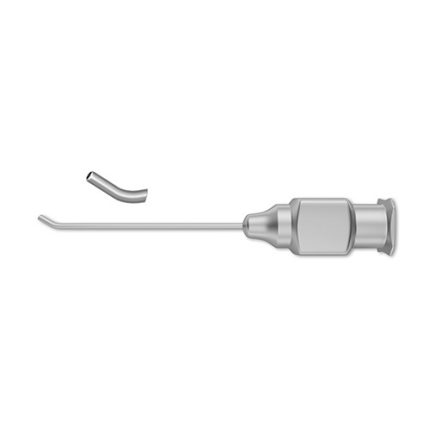
Knolle Anterior Chamber Irrigating Cannula
irrigating ports at 12, 10 & 2 o'clock, 23-gauge, overall length tip to hub 1-1/2" (3.8 cm) Knolle Anterior Chamber Cannula is a frequently used tool in cataract extraction procedures. The small gauge cannula with angled tip is nimble enough to fit into a small limbal incision accessing the anterior chamber. It may be used to aspirate fluid within the anterior chamber exposing the lens capsule.
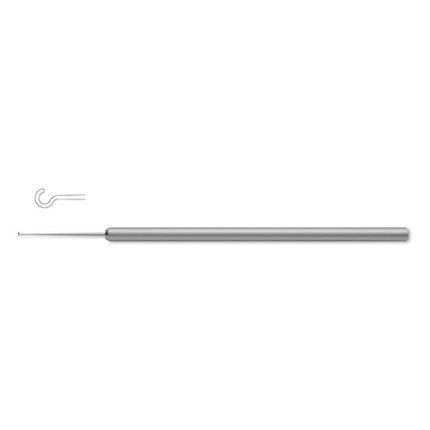
Knolle Iris Hook
0.5 mm hook, 4-7/8" (12.4 cm) Knolle Iris Hook is a commonly used tool in cataract surgeries. The hook is used to retract a portion of the iris tissue to gain access to the lens capsule. Often, multiple hooks are used at different positions around the iris and anchored, providing adequate visualization for lens removal. The Knolle hook has a slender tip for more selective retraction while featuring a serrated handle for an improved grip.
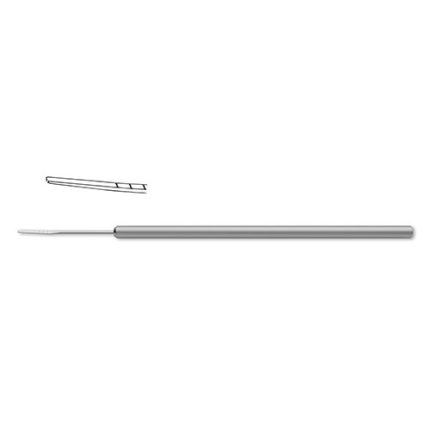
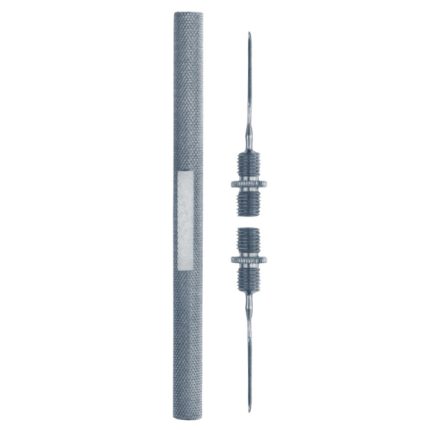
Knolle Lens Nucleus Spatula & Gauge
30 mm blade, with marking at 5 mm, 6 mm & 7 mm from tip, 5" (12.7 cm) Knolle Lens Spatula & Gauge is a useful tool for cataract procedures and other ophthalmologic procedures involving the lens. The spatula may be used to handle the nucleus during extraction or rotation. The gauge feature on the lens allows the surgeon to track the depth of the tool during the procedure.
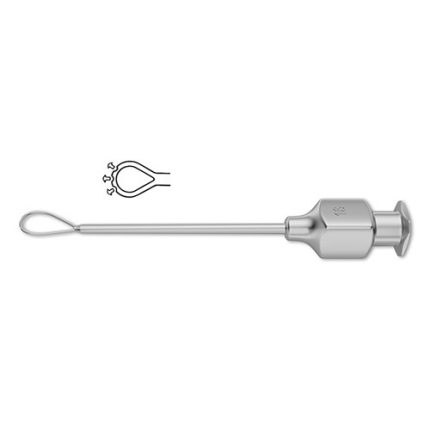
Knolle-Pearce Irrigating Lens Loop
1.0 mm tip, angled 30 degrees, sandblasted, 23-gauge, 3/4" (2.0 cm)Knolle-Pearce Irrigating Lens Loop is a useful tool for cataract and lens extraction procedures. The loop is instated between the nucleus and the posterior capsule; fluid is allowed to pass into this space to allow for easier removal of the lens. Three irrigation ports provide ample fluid distribution.
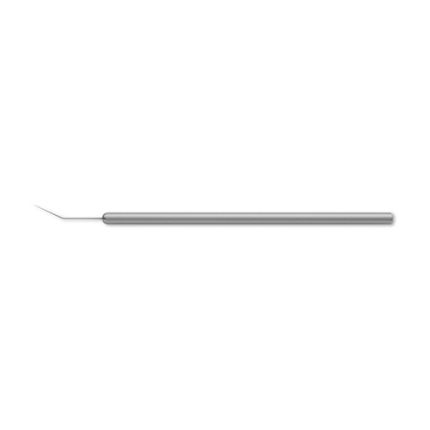
Koch Stop & Chop Manipulator
angled shaft w/ 1.5 mm tip, 4-1/3" (11.2 cm) Koch Stop & Chop Manipulator is a tool used exclusively for cataract procedures. The manipulator is used to facilitate the stop and chop technique, in which the lens nucleus is initially sculpted and then chopped into smaller pieces for extraction. The angled shaft aids in accessing the lens capsule.

Kocher Clamp Forceps
Longitudinal serrations, 5" (12.7 cm) jaw length, 10-1/4" (26.0 cm)
Kocher Clamp Forceps have longitudinal serrations on its 5" jaw length. These serrations help to reduce the chances of slippage to the tissue or intestines that are being clamped. These ring-handled clamp forceps also have the option of a straight or curved jaw.

Kocher Forceps
Kocher Forceps
1x2 teeth, 5-1/2" (14.0 cm)
Kocher Forceps contain 1x2 teeth on straight or curved jaws to avoid slippage when trying to grip arteries. Although this hemostatic forceps is typically used for general surgeries, it may also be applied to more specific procedures such as draining of the gallbladder or removal of the thyroid.
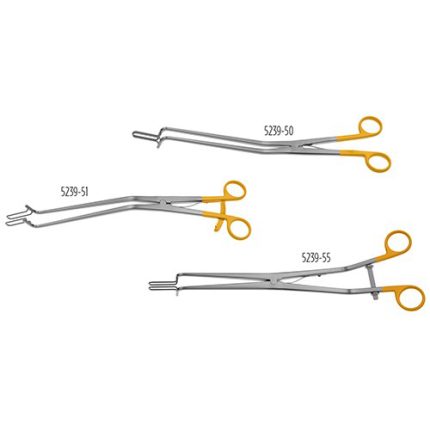
Kogan Endocervical Speculum11″ (27.9 cm)
Kogan Endocervical Speculum is designed to view the squamocolumnar junction of the endocervix. The speculum is available with ring handles and various different tip styles to accommodate a wide range of cases. Tips may be standard, angled, or narrow with the option of screw, ratchet, or locking handles
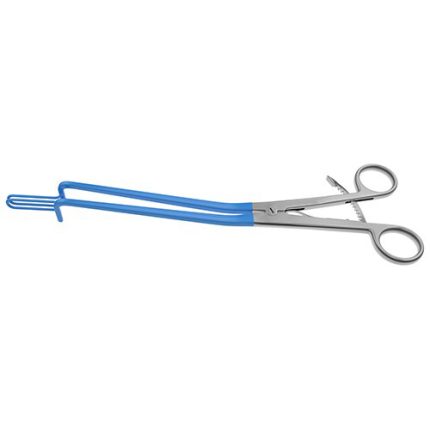
Kogan Nonconductive Endocervical Speculum
11" (28.0 cm) Kogan Nonconductive Endocervical Speculum is designed for examination of the vaginal or cervical canal. Insulated instruments feature a smooth, durable, non-conductive nylon coating for LEEP, LLETZ and other electrosurgical ob-gyn procedures. The blue nylon resists abrasion and provides excellent insulation. These instruments are fully autoclavable, and can be insulated however needed, including with exposure to the stainless steel in certain areas like tenaculum tips. Most instruments, including ones not shown insulated here, can be insulated for use in electrosurgical cases – please ask your sales representative or contact us for more information

Kraff Capsule Tag Forceps
11.0 mm angled jaws, 15.0 mm smooth platform, 4" (10.0 cm) Kraff Capsule Tag Forceps are a commonly used tool in cataract in IOL implantation procedures. The 11.0 mm angled jaws are ideal for handling tags of the capsule created by an incision. The jaws are delicate enough to prevent unwanted radial tears and capsulo-dialysis. The ribbed handle with finger holes provides a firm, adjustable grip during the operation.