
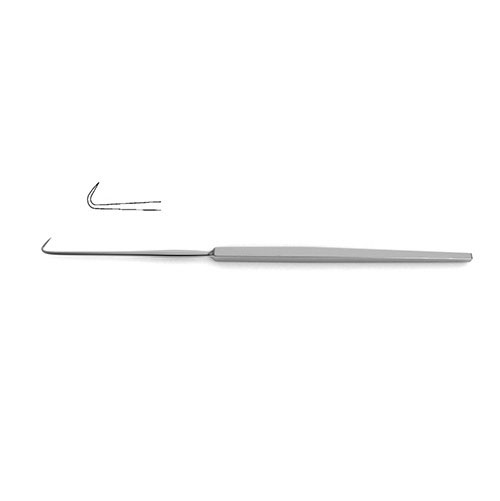
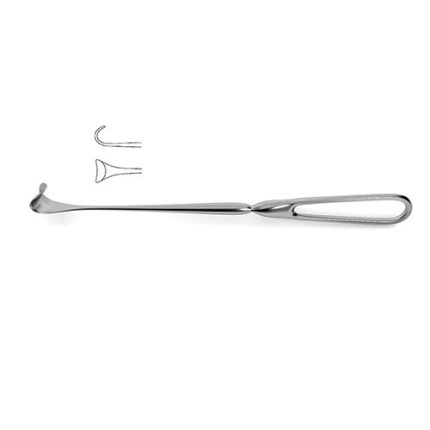
Cottle Tenaculum
Cottle Tenaculum
angled, 6-1/4″ (16.0 cm)
Cottle Tenaculum has a long, slim handle with a hook that tapers into an angled point. The primary use of this hook is to grasp or hold tissue away from the surgical site in order to provide the surgeon with greater visibility to the area. This instrument is offered in a 6 ¼” length.
Related products
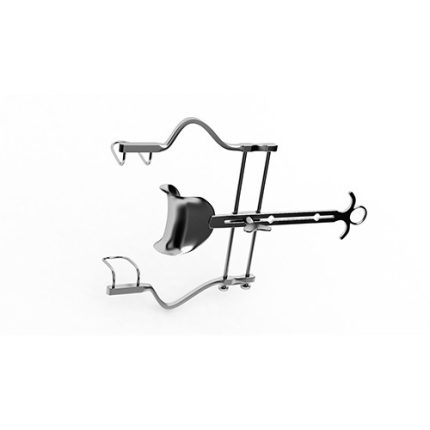
Abdominal Retractor W/ Fixed Side Blades – 2 1/2″ Deep
w/ fixed fenestrated side blades, 2-1/2" deep & center blade #2470-72 (3" x 2")
Balfour Abdominal Retractor with Fixed Side Blades incorporates 2 ½" deep fenestrated side blades that are attached onto the center blade, which is 3" wide x 2" deep. Two different sizes of this retractor are offered according to the maximum spread they provide. The side blades of this particular retractor can be pushed and held away from each other to open up an incision in the abdominal cavity.
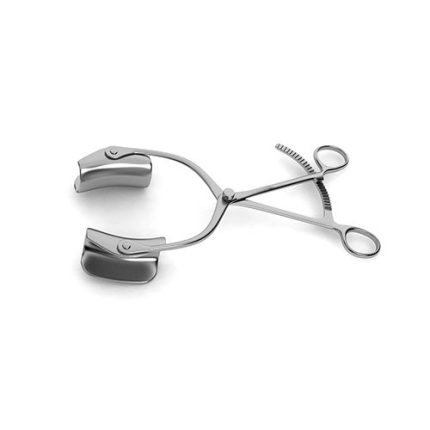
Collin Abdominal Retractor
Set includes: frame (110.0 mm spread, 9-1/4" (23.5 cm)) & pair of blades (62.0 x 38.0 mm)
Collin Abdominal Retractor is an entire set that includes a frame and a pair of blades. These blades are outwardly curved at a right angle and are deep enough to retract thicker areas of the abdomen. In addition, the retractor contains ring handles and a spreader that has a maximum spread of 110.0 mm, which can keep larger incisions open.
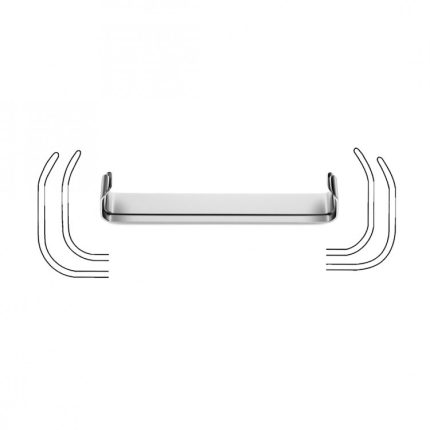
Collin Retractor
Collin Retractor
double-ended, set of 2, 6-1/2" (16.5 cm)
Collin Retractor is designed to push back tissue that may conceal part of the area that is being operated on. With the help of the rounded double-ended blades on each end, damage to tissues is reduced while they are held firmly in the desired position. Depending on the size of the incision, this retractor comes in a set of two.
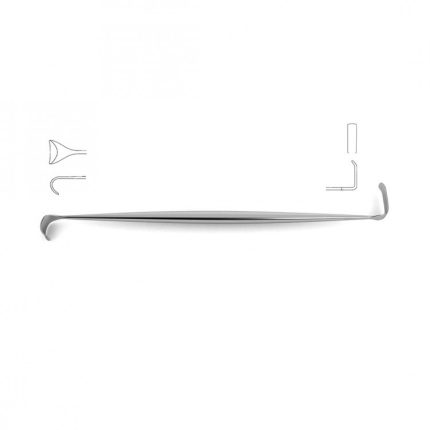
Cope Retractor
Double-ended, 6.0 mm & 11.0 mm, 7-1/8" (18.0 cm)
Cope Retractor is a double-ended surgical instrument primarily used to pull back skin or organs that may obstruct the operating area. The main features of this retractor are its different shaped blades. For example, one end contains a strongly curved blade with a lip. The other end, however, contains a sharp, right angle blade with a ridge on the tip.
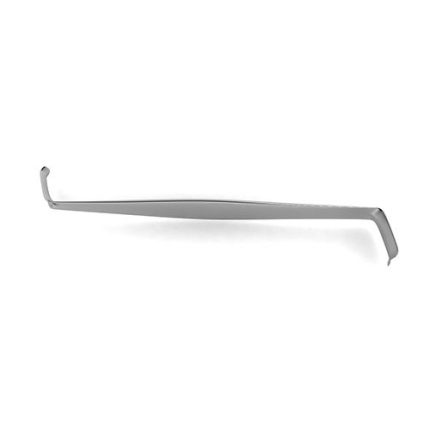
Crile Retractor
Crile Retractor
double-ended, 3.0 mm x 11.0 mm & 6.0 mm x 20.0 mm blades, 4-1/2" (11.4 cm)
Crile Retractor is a hand-held instrument that can hold back tissue or organs so that the surgical site can be accessed. This retractor has a wide body and right-angle blades on each end to maintain the desired position once inserted around the edges of an incision. It is offered in a 4 ½" length, which is idea for smaller openings.
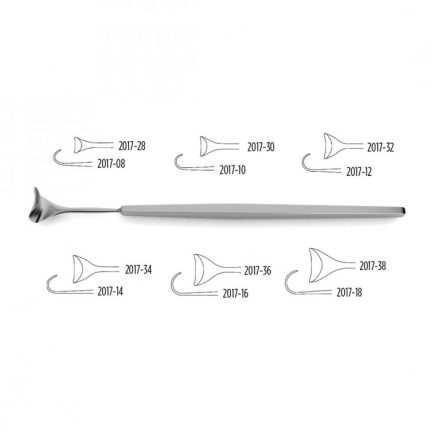
Cushing Vein Retractor
Cushing Vein Retractor
Cushing Vein Retractor has a sharply curved blade and is a popular retractor used during neurosurgery or as rib spreaders. In this way, the ribs or the tissues that are held can be pulled and kept away from the surgical area. Depending on the situation, this instrument is available in different lengths and widths.
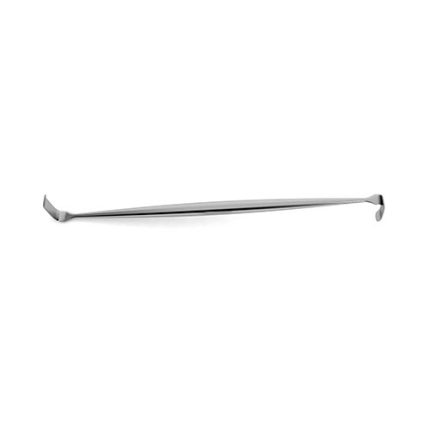
Davis Retractor
Double-ended, 5.0 mm x 16.0 mm & 8.0 mm x 21.0 mm blades, 5-1/2" (14.0 cm)
Davis Retractor is a stainless steel instrument that is double-ended and has opposing blades on either end. This retractor is able to divide and keep edges of an incision open. This instrument is also protected by the Euro Site Industries manufacturer warranty on defects in materials and workmanship.
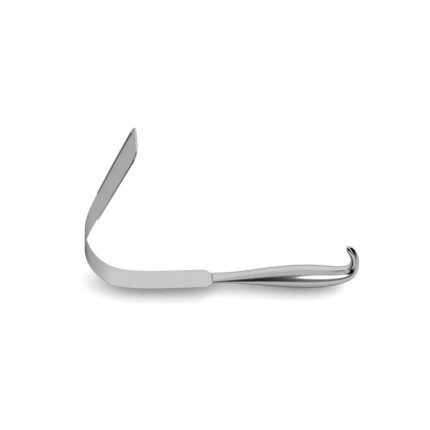
Glass Abdominal Retractor
Abdominal Retractor
6" (15.2 cm) x 3-1/4" (8.3 cm), 9-3/4" (24.5 cm)
B.E. Glass Abdominal Retractor contains a flexible blade with a strong curve that is affixed to a handle for gripping purposes. This type of retractor is intended to be used during surgeries that require retracting or exposing the organs in order to provide better accessibility for the surgeon.

Reviews
There are no reviews yet.